
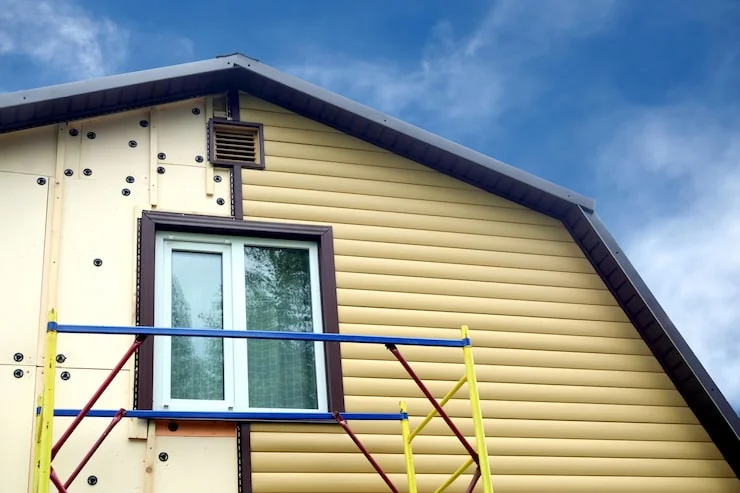
Your home’s exterior siding does far more than boost curb appeal. It serves as a protective barrier against weather while playing a significant role in your home’s thermal performance. Outdated or damaged siding allows conditioned air to escape and outdoor temperatures to penetrate, forcing your HVAC system to work harder and driving up utility costs. Modern siding materials and proper installation techniques can substantially reduce energy waste.
The Thermal Envelope Concept
Your home’s thermal envelope includes all components that separate conditioned indoor space from the outdoor environment. This envelope consists of the foundation, walls, roof, windows, doors, and siding. Any gaps, cracks, or poorly insulated sections create weak points where heat transfers in or out.
Old siding often develops gaps between boards as materials age and settle. Wood warps, vinyl becomes brittle and cracks, and aluminum dents. These imperfections break the thermal barrier even if your wall insulation remains intact. Air leaks around siding seams, at corners, and where siding meets windows and doors account for significant energy loss.
When contractors install new siding, they first inspect and repair the underlying structure. Damaged sheathing gets replaced. A weather-resistant barrier goes up to block moisture and air infiltration. These preparatory steps create a solid foundation for the finish siding to perform optimally.
Insulation Integration
Many modern siding products include built-in insulation or accommodate additional insulation layers during installation. Insulated vinyl siding features foam backing that fills the gap between the siding and wall sheathing. This continuous insulation layer eliminates thermal bridging that occurs through wall studs.
Rigid foam insulation boards can be installed over existing sheathing before siding goes on. This approach increases your wall’s R-value without reducing interior room dimensions. Common options include expanded polystyrene, extruded polystyrene, and polyisocyanurate foam boards, each offering different insulation values and price points.
The insulation value improvement varies by product and installation method. Adding 1-inch foam board increases R-value by approximately R-5. Insulated vinyl siding adds R-2 to R-3. While these numbers seem modest, they show substantial improvement over uninsulated siding, especially in older homes built before modern energy codes.
Air Sealing Benefits
Proper siding installation involves meticulous attention to air sealing. Contractors seal around all penetrations where pipes, vents, electrical lines, and other utilities pass through exterior walls. They caulk gaps around windows and doors. Joints where different materials meet get sealed to prevent air leakage.
These details matter tremendously for energy efficiency. Studies show that air leakage accounts for 25-40% of heating and cooling costs in typical homes. Addressing air infiltration during siding replacement captures easy efficiency gains that immediately reduce energy bills.
House wrap or weather-resistant barriers installed under siding create another defense layer against air infiltration and moisture intrusion. These materials breathe to allow interior moisture to escape while blocking exterior moisture and air from entering. Proper installation with sealed seams maximizes their effectiveness.
Material-Specific Efficiency Characteristics
Different siding materials offer varying thermal performance characteristics. Knowing these differences helps you select the option that best meets your efficiency goals and budget.
Fiber cement siding provides good insulation properties and durability. It does not conduct heat readily, helping slow thermal transfer through walls. Its dimensional stability means it maintains tight seams that resist air leakage over time.
Wood siding offers natural insulation properties superior to aluminum or basic vinyl. However, wood requires regular maintenance to prevent rot and moisture intrusion that compromise its thermal performance. Cedar and redwood contain natural oils that resist decay better than pine or fir.
Vinyl siding alone provides minimal insulation value, but insulated vinyl products significantly improve performance. The foam backing creates a thermal break and reduces air movement behind the siding. Quality vinyl also resists fading and degradation from UV exposure, maintaining its protective properties for decades.
Engineered wood siding combines wood fiber with resins to create stable panels that resist moisture damage better than solid wood. These products typically accept paint well and hold fasteners securely, reducing the risk of loose siding that allows air infiltration.
Color Considerations for Energy Performance
Siding color affects how much solar heat your walls absorb. Dark colors absorb more solar radiation, heating exterior walls and increasing cooling loads during summer. Light colors reflect more sunlight, keeping walls cooler and reducing air conditioning demands.
The energy impact of color varies by climate. In cold regions where heating dominates annual energy use, darker siding may reduce heating costs by capturing solar warmth. In hot climates dominated by cooling needs, lighter colors deliver greater savings. Consider your local climate and which season drives higher energy bills when selecting colors.
Reflective or cool siding products incorporate pigments engineered to reflect infrared radiation while maintaining desired colors. These advanced materials stay cooler than traditional dark siding in the same color range, offering aesthetic flexibility without sacrificing efficiency.
Ventilation & Moisture Management
Proper siding installation includes details that promote ventilation and moisture drainage. These features prevent moisture accumulation within wall assemblies that can degrade insulation and structural components.
Contractors install furring strips or drainage planes behind siding to create an air gap. This space allows moisture that penetrates the siding to drain down and evaporate before reaching the weather barrier or sheathing. The air circulation also helps keep siding dry, extending its lifespan.
Weep holes at the bottom of certain siding types allow accumulated moisture to escape. Properly flashed windows and doors direct water away from wall penetrations. These moisture management strategies protect your investment and prevent problems that compromise efficiency and require costly repairs.
Impact on HVAC Performance
When siding replacement reduces air infiltration and improves wall insulation, your heating and cooling systems operate more efficiently. The equipment runs for shorter cycles to maintain desired temperatures. This reduces wear on mechanical components, possibly extending equipment life.
Lower heating and cooling loads may allow you to install smaller, less expensive HVAC equipment when replacement time comes. Right-sizing equipment based on actual load calculations rather than old rules of thumb improves comfort and efficiency while reducing upfront costs.
Return on Investment
Energy-efficient siding typically costs 15-30% more than basic options. However, reduced energy bills offset this premium over time. Payback periods vary based on local energy costs, climate severity, and the condition of your previous siding. Most homeowners see payback within 8-12 years while enjoying improved comfort immediately.
Beyond energy savings, new siding increases home value and increases marketability. Buyers appreciate modern, low-maintenance exteriors and appreciate lower utility costs. Many siding products carry warranties extending 25-50 years, providing long-term protection and peace of mind.
Maximizing Efficiency Gains
To optimize energy savings from new siding, address other efficiency opportunities simultaneously. Add insulation to attics and basements. Seal ductwork. Upgrade to efficient windows if your current ones are old. These complementary improvements work synergistically, delivering greater savings than any single upgrade alone.
Work with experienced contractors who understand building science principles. Proper installation techniques matter as much as material selection for achieving efficiency goals. Attention to details such as air sealing, flashing, and moisture management separates adequate work from installations that deliver maximum performance and durability.
New siding is an opportunity to substantially improve your home’s energy efficiency while updating its appearance. Investing in quality materials and installation captures both immediate comfort benefits and long-term financial returns through reduced energy costs.